
The human voice is one of the most remarkable instruments in existence. Every song, speech,…
Why STEM Education Needs the Arts
Science, technology, engineering, and mathematics are often viewed as the foundation of innovation. These fields help us understand the world, solve problems, and create new possibilities. However, behind every discovery and invention is something equally important: creativity. The arts provide the imagination, communication, and original thinking that allow scientific ideas to grow into meaningful solutions.
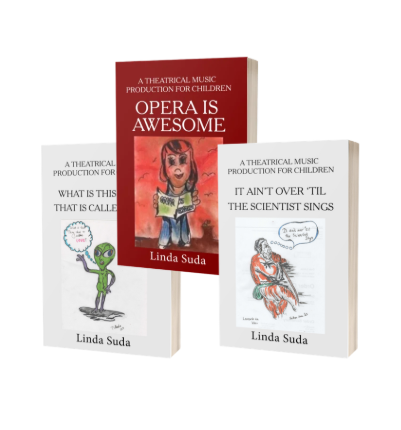
Linda Suda’s children’s opera It Ain’t Over ’Til the Scientist Sings explores the powerful connection between the arts and sciences. Through music, theatre, and the stories of remarkable thinkers, the production shows children that creativity is not separate from scientific achievement. Instead, imagination and artistic expression can strengthen the way we approach discovery.
Many of history’s greatest innovators were not limited to a single area of knowledge. Leonardo da Vinci is remembered not only for his inventions and scientific studies but also for his paintings, designs, and artistic vision. His ability to observe, imagine, and create allowed him to approach challenges from different perspectives.
The arts encourage the kind of flexible thinking that is essential in STEM fields. Scientists and engineers often need to look beyond existing answers, imagine new possibilities, and find creative approaches to complex problems. Skills developed through music, theatre, and visual arts can support these abilities by encouraging curiosity and exploration.
Music, in particular, teaches valuable lessons about structure, patterns, collaboration, and discipline. A musical performance requires planning, teamwork, and attention to detail, much like a scientific project. Students who participate in the arts learn how individual contributions come together to create something greater than any single person could achieve alone.
The connection between the arts and sciences also helps children develop a more complete education. In It Ain’t Over ’Til the Scientist Sings, young audiences meet influential figures such as George Washington Carver, Marie Curie, Albert Schweitzer, and others whose achievements were shaped by curiosity and creativity. Their stories demonstrate that great minds often explore multiple areas of interest.
When schools combine STEM learning with the arts, students are encouraged to become thinkers who can analyze problems while imagining new solutions. They learn that success is not only about memorizing information but also about asking questions, experimenting, and seeing possibilities that others may overlook.
Linda Suda’s opera reminds audiences that the arts are not an extra activity separate from serious learning. They are an essential part of developing innovative minds. By bringing music and science together, children discover that creativity has a place in every field.
STEM education becomes stronger when it includes the arts because innovation requires more than knowledge. It requires vision, imagination, and the ability to connect ideas in new ways. The future belongs to those who can think both logically and creatively, and the arts help children develop exactly that balance.
Comments (0)