
Science, technology, engineering, and mathematics are often viewed as the foundation of innovation. These fields…
Using Humour to Introduce Children to Complex Subjects
Children often become more willing to learn when a lesson makes them smile. Humour can reduce anxiety, hold attention, and make difficult ideas feel less intimidating. When used carefully, it turns unfamiliar subjects into experiences that children can understand, discuss, and remember.
Complex topics sometimes appear overwhelming because they involve technical language or abstract ideas. A child may struggle to understand how the voice works, how scientific discovery happens, or how emotions influence relationships. Humour gives these subjects a familiar and welcoming form. A funny character, unexpected situation, playful conversation, or comic misunderstanding can create an entry point into the lesson.
Theatre is especially effective because humour can be seen as well as heard. Facial expressions, costumes, movement, timing, and character reactions all contribute to the learning experience. Children remain alert because they want to know what will happen next. While they are enjoying the performance, they are also listening to information and connecting it with memorable characters.
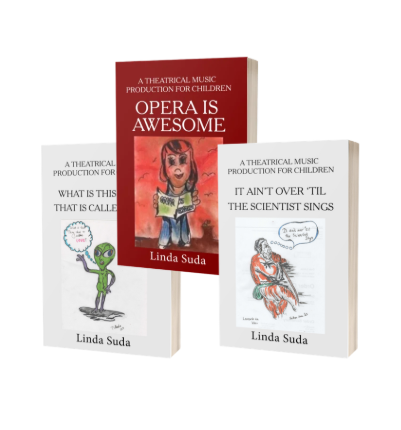
Linda Suda uses this approach throughout her theatrical music productions for children. In Opera Is Awesome, the parts of the vocal apparatus are transformed into lively personalities. The diaphragm, vocal cords, resonators, and articulators become characters with distinct voices, habits, and comic qualities. This allows children to learn about breathing, posture, sound production, projection, and diction without feeling as though they are attending a formal lecture.
The humour does not replace the educational content. Instead, it supports it. Children can associate each function with a character and remember the role that character played. Technical information becomes easier to follow because it has been connected with dialogue, action, and music.
In It Ain’t Over ’Til the Scientist Sings, historical figures and scientific ideas are introduced through playful conversations and imaginative scenes. George Washington Carver, Marie Curie, Leonardo da Vinci, the Wright brothers, and Albert Schweitzer become approachable figures rather than distant names in a textbook. Their achievements remain important, but humour reveals their curiosity, frustrations, determination, and personal interests.
What Is This Thing That Is Called Love? uses visitors from another planet to explore human emotions. Their confusion about love creates amusing situations while encouraging children to think about friendship, compassion, work, nature, confidence, and inner beauty. The humour makes emotional discussion feel natural and safe.
Humour also encourages participation. Children may feel less self conscious when a production allows them to be playful. They can experiment with voices, movement, timing, and expression while developing confidence. They learn that education can involve laughter without losing meaning.
Linda Suda’s children’s opera books offer schools, teachers, families, and theatre groups a creative way to introduce challenging subjects. Through music, comedy, movement, and storytelling, these productions make technical, scientific, and emotional lessons accessible. They show that children do not have to choose between learning and enjoyment. When humour is part of the experience, serious ideas can become clearer, friendlier, and far more memorable.
Get Your Copy On Amazon:https://www.amazon.com/stores/Linda-Suda/author/B0GMD8C4G6
Comments (0)