
Science, technology, engineering, and mathematics are often viewed as the foundation of innovation. These fields…
Why Movement and Expression Matter in Musical Performance
Musical performance is not created by sound alone. A singer may have a beautiful voice, but the performance can still feel distant if the body, face, and emotions do not support the music. Movement and expression help performers communicate the meaning of a song, connect with an audience, and bring a character fully to life.
Children often understand a story more clearly when they can see its emotions. A joyful character may move with energy and confidence, while a frightened character may appear hesitant and withdrawn. Facial expressions, posture, gestures, and physical reactions provide important clues about what is happening. These details help young audiences follow the story, even when the music or language is unfamiliar.
Movement also teaches children how to use the body as part of their performance. Singing requires breath control, balance, posture, and physical awareness. When children learn to stand properly, move with purpose, and respond naturally to the music, their voices can become stronger and clearer. They also begin to understand that every action on stage should contribute to the character or scene.
Expression gives meaning to the words being sung. Performers must consider what their characters want, how they feel, and why they are singing. A song about friendship should not be performed in the same way as a song about adventure, disappointment, discovery, or love. The emotional intention influences the voice, face, movement, and pace of the performance.
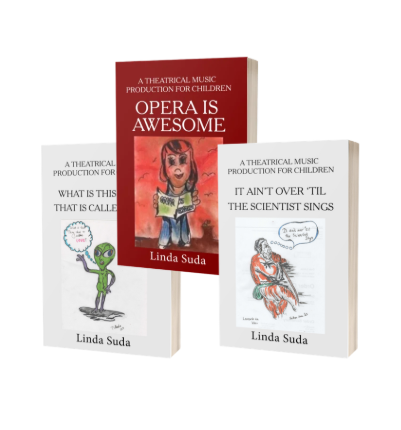
Linda Suda’s theatrical music productions for children place movement and expression at the centre of learning. In Opera Is Awesome, children explore the physical parts involved in singing, including the diaphragm, vocal cords, resonators, and articulators. Through humorous characters, songs, dance, and theatrical action, they learn that the entire body contributes to vocal communication.
It Ain’t Over ’Til the Scientist Sings uses movement and performance to introduce children to science, creativity, and historical figures. Students portray people such as George Washington Carver, Marie Curie, Leonardo da Vinci, the Wright brothers, and Albert Schweitzer. By stepping into these roles, young performers do more than repeat facts. They explore curiosity, determination, imagination, and the challenges connected with discovery.
In What Is This Thing That Is Called Love?, movement and expression help children understand friendship, compassion, confidence, care for animals, respect for nature, and inner beauty. The characters’ reactions allow these emotional ideas to become visible and easier to discuss.
Performing with expression can also strengthen confidence. Children learn to communicate before an audience, manage nervousness, and trust their preparation. They become more aware of how their choices affect the people watching and the performers around them.
Linda Suda’s children’s opera books give schools, teachers, families, and theatre groups an engaging way to combine singing with acting and movement. These productions show young performers that music should not only be heard. It should also be seen, felt, understood, and shared.
Get Your Copy On Amazon:https://www.amazon.com/stores/Linda-Suda/author/B0GMD8C4G6
Comments (0)